Donald Trump says US is ‘going to run’ Venezuela after overnight strikes – live | Venezuela

Check out our latest products
![[Upgraded] USB Computer /Laptop Speaker with Stereo Sound & Enhanced Bass, Portable Mini Sound Bar for Windows PCs, Desktop Computer and Laptops](https://m.media-amazon.com/images/I/61NAayKmVIL._AC_SL1500_.jpg)


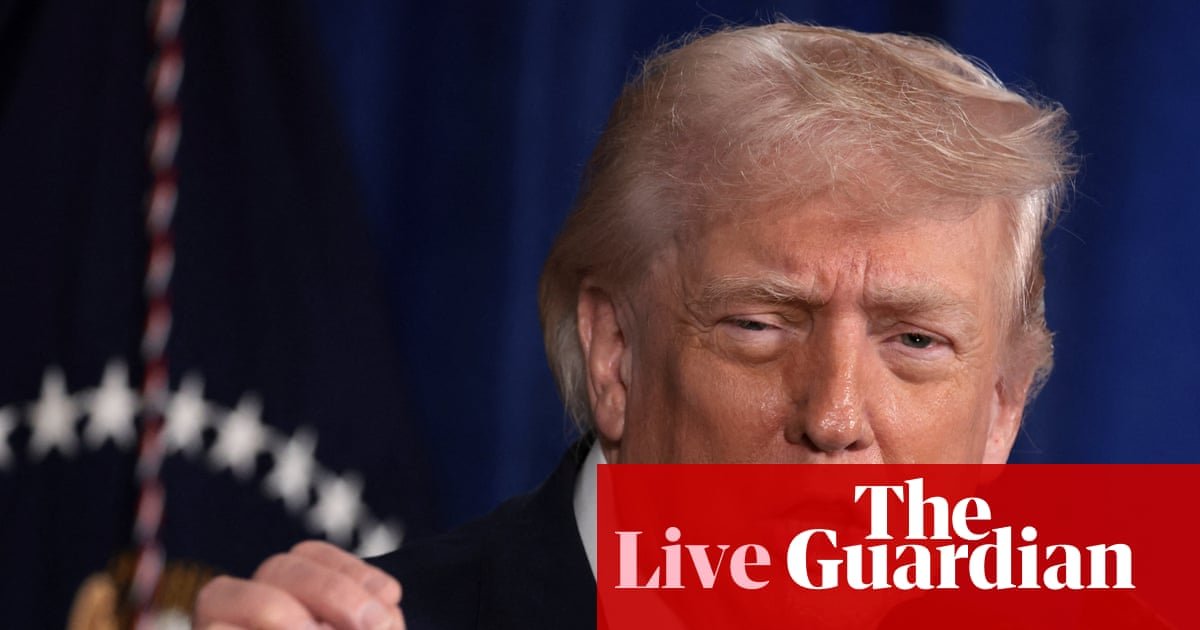
Trump: ‘We’re going to run the country’
The US president has claimed at the press conference now under way in Florida that the United States is going to run Venezuela for the time being, although it’s unclear how that would be done.
“We’re going to run the country until such time as we can do a safe, proper and judicious transition,” Trump said. He has given no details.
He just called Maduro a dictator and a drug kingpin.
Key events
German chancellor Friedrich Merz said a little earlier that Nicolás Maduro had “led his country to ruin”, after the US snatched the Venezuelan leader out of the country during a raid on Caracas overnight.
Merz noted Germany had not recognised the last Venezuelan election in 2024 as it was “rigged” and that Maduro had “played a problematic role in the region”, including by “entangling Venezuela in the drug trade”, Agence France-Presse reports.
But he also said that the legal aspects of the US actions were “complex”, and in general “the principles of international law must apply in relations between states”.
“Political instability must not be allowed to arise in Venezuela now,” Merz added.
Tiago Rogero
Here is more from Venezuela’s vice-president, Delcy Rodríguez.
She has condemned the capture of Nicolás Maduro by the US, calling it an “unprecedented military aggression”, and demanded the “immediate release” of the dictator and his wife, Cilia Flores.
She delivered a televised address a few hours after the US president, Donald Trump, said at a press conference that Rodríguez had held a lengthy conversation with the secretary of state, Marco Rubio, and that she was “essentially willing to do what we think is necessary to make Venezuela great again”.
Maduro’s vice-president, who has been in office since 2018, nonetheless maintained the critical tone adopted by all members of Maduro’s cabinet since the first reports of the US’s overnight bombardment.
“The government of the US launched an unprecedented military aggression against the Bolivarian Republic of Venezuela. It constitutes a terrible stain on the development of bilateral relations through that military operation,” she said.
She added that Venezuela “will never again be anyone’s colony – neither of old empires, nor of new empires, nor of empires in decline”.
Rodríguez also echoed an argument repeatedly made by Maduro before his capture: that they believe the real objective of the four-month-long US military pressure had never been a supposed “war on drugs”, but rather “regime change” and the “seizure of our energy, mineral and natural resources”.
The vice-president said the “Venezuelan people … are outraged by the illegal and illegitimate kidnapping of the president and the first lady”.
“We call on the Venezuelan people to remain calm and to face this together, in perfect national unity. Let this popular, military and police fusion become a single body as we enter this crucial phase of defending our sovereignty and our national independence,” she said.
Rodríguez also urged other countries to unite, warning that “what they did to Venezuela today, they can do to anyone. This brutal use of force to bend the will of peoples can be done to any country.”
The Guardian has whisked up an express episode of the Politics Weekly America podcast, with our Latin America correspondent, Tom Phillips, explaining the latest about Venezuela.
Have a listen here.
Reports coming through now from Nicolás Maduro’s vice-president in Venezuela, Delcy Rodríguez, that contrast sharply from the portrayal given by Donald Trump at the presidential press conference in the US earlier.
There, Trump said he understood she’d be sworn in as president of Venezuela, after the US captured and spirited away Maduro, and that she had, essentially, agreed to cooperate with the US because she had no “choice”.
Now Rodríguez, a staunch loyalist of Maduro, has appeared on state television and across radio stations in there, saying that Maduro “is Venezuela’s only president”.
She described Maduro as having been kidnapped and called for him and his wife to be freed.
Rodríguez spoke on state television from Caracas with her brother, national assembly head Jorge Rodríguez, interior minister Diosdado Cabello, and the foreign and defense ministers, Reuters reports.
Rodríguez called for calm and unity to defend the country amid Maduro’s “kidnapping” and said Venezuela will never be the colony of any nation.
Nicolás Maduro, his vice-president Delcy Rodríguez, left, and his wife, Cilia Flores, in 2018. Photograph: Ariana Cubillos/AP
Venezuela’s Delcy Rodríguez appears to be in Caracas
Wire reports are coming in that Delcy Rodríguez is in Venezuela.
There have been hours of rumors that Nicolás Maduro’s vice-president may not have been in the country, and even that she may be in Russia. She had been speaking by telephone on state television but her whereabouts were not made public.
Then Donald Trump said he understood she’d been sworn in as president of the country to replace Maduro, but without giving details.
Now news agencies are reporting that she’s in the Venezuelan capital, Caracas. Reuters just reported that she has just been seen on TV alongside other leading politicians, and her brother.
Camille Rodríguez Montilla
At a gathering of Venezuelan exiles in Valencia, Spain, the only
subject of conversation was the events in Caracas overnight.
Since the beginning of the day, WhatsApp groups and cellphones have been going off constantly. As usual in Venezuelan family meetings, all of the conversations crossed, people interrupted each other, and theories were thrown into the air constantly.
The celebratory mood paused for a moment when Donald Trump brushed off the suggestion that Nobel peace prize-winning opposition leader María Corina Machado could play a role as, at least, a potential interim leader.
“I think it would be very tough for her to be the leader. She doesn’t have the support within or the respect within the country,” Trump told reporters at the presidential press conference earlier. “She’s a very nice woman, but she doesn’t have the respect.”
There was a moment of disappointed silence before one of those
gathered rationalised the comments away, saying: “He probably said that regarding the military forces inside the country, not the people.”
Then the celebrations continued.
Here’s an excellent, short video explainer from our Latin America correspondent, Tom Phillips, who has called the US intervention in Venezuela overnight “one of the most dramatic moments in Latin American history”.
Tom said that he’s never seen anything like this in 25 years reporting on the continent and it is the most dramatic US military action since the invasion of Panama in 1989, and a surprise.
And the US president was also asked at the press conference about how he could justify capturing Venezuela’s Nicolás Maduro when he stunningly pardoned the former president of Honduras in December.
Juan Orlando Hernández was freed from a US prison after having been sentenced to 45 years behind bars for allegedly creating “a cocaine superhighway to the United States”, shocking many.
And this as the Trump administration was bombing boats in the Caribbean Sea that it was claiming, but not proving, were all “narco terrorism” shipments of illegal drugs bound for the US from Venezuela. The pardon received bipartisan criticism.
At the press conference today, Trump said the Honduran had been “unfairly persecuted” by the Biden administration and, turning to his habit of referring to himself in the third person, said: “The man that I pardoned was treated like the Biden administration treated a man named Trump.”
Meanwhile, just to catch up on some loose ends, Donald Trump was asked at the press conference why running a country in South America was consistent with his “America first” mantra.
The US president said: “Well, I think it is, because we want to surround ourselves with good neighbors. We want to surround ourselves with stability … with energy. We have tremendous energy in that country. It’s very important that we protect it,” he said, undoubtedly referring to Venezuelan oil.
“We need that for ourselves, we need that for the world and we want to make sure we can protect it,” he said.
US secretary of state Marco Rubio made ominous remarks relating to Cuba, the country of his roots and towards whose regime he has a deep antipathy. The Trump administration did not say today that it will reprise its action in Venezuela in Cuba, but it didn’t say it would not, either.
Rubio said in response to the topic coming up in the press question-and-answer session: “I mean, I just gave you a statement a few minutes ago about, you know, when the president speaks you should take him seriously. Suffice it to say, you know, Cuba is a disaster.”
He went on: “It is run by incompetent, senile men and, in some cases, not senile, but incompetent. Nonetheless, it has no economy, it’s in total collapse … all the guards that helped protect [Venezuela’s captured leader] Maduro, their spy agency, they were all full of Cubans. This poor island took over Venezuela.
“ … So, yeah, if I lived in Havana and I was in the government, I’d be concerned, at least a little bit.”
Trump added that as far as the US is concerned, Venezuela is still under an oil embargo and Venezuelan oil will not be allowed to reach Cuba.
‘Cuba is a failing nation and we want to help the people,’ says Trump
Cuba came up at the press conference, a country very closely allied with Venezuela and immediately on a lot of people’s minds after the US action in South America overnight, wondering if the US would be audacious enough to attempt to make a similar intervention.
Donald Trump said it is “an interesting case”.
“Cuba, as you know, is not doing very well right now. That system has not been a very good one for Cuba. The people there have suffered for many, many years and I think Cuba is going to be something we’ll end up talking about, because Cuba is a failing nation right now, very badly failing, and we want to help the people.”
He went on: “It’s very similar in the sense that we want to help the people in Cuba, but we also want to help the people who were forced out of Cuba and living in this country. Do you want to say something about that, Marco?”
Trump ceded the podium to the US secretary of state, Marco Rubio, the former Republican senator of Florida (and presidential candidate who ran against Trump for the 2016 nomination and lost). Rubio is a Cuban American who was born in Miami to parents who fled Cuba in the 1950s before Fidel Castro came to power but regard themselves as having escaped communism. Rubio is deeply hostile to the Cuban regime.
‘I’m not thrilled with Putin,’ says Donald Trump at end of Venezuela press conference
The presidential press conference has just ended and Donald Trump and his small senior entourage have exited the stage at his Mar-a-Lago residence and club in Florida, leaving behind a lot of unanswered questions.
Russia, according to the news wires, has denied that the Venezuelan vice-president and Nicolás Maduro’s presumed successor, Delcy Rodríguez, is in Russia, which was been a rumour all morning.
Trump said she had just been sworn in as the new president of Venezuela and will be cooperating with the US, statements which are unverified elsewhere.
The last question of the press conference concerned Russia’s president, Vladimir Putin, and the war in Ukraine.
Trump claimed that progress was being made on negotiations towards peace, without giving further details, and he called the war “a bloodbath” and said “I’m not thrilled with Putin” and that Russia “is killing too many people”.
Trump says administration has not talked to Venezuela’s exiled opposition leader María Corina Machado
Donald Trump just said he and his administration have not talked to Venezuela’s exiled opposition leader María Corina Machado today. He took on a dismissive tone at the question from the reporters gathered at Mar-a-Lago for this ongoing press conference.
“I think it would be very difficult for her” to return to lead Venezuela, the US president just said, in response to a reporter’s question.
“She does not have the support in Venezuela; she is a very nice woman but she does not have the support,” he said. The presser now bounces to the next topic. We’ll come back in a moment to what Trump and Rubio just said about Cuba.
Trump’s now being asked about “boots on the ground” in Venezuela. He said a US military presence will only be in relation to sorting out Venezuela’s oil industry. Again, no further detail. Trump is about to take the last question.
Donald Trump said his secretary of state, Marco Rubio, has talked with the Venezuelan vice-president, Delcy Rodríguez, today and mentions that she agreed to work with the US.
The US president said she has already been sworn in as president. A few hours ago there were reports that she was in Russia, so the situation remains unclear at this moment and the press conference question-and-answer session with Trump is now bouncing around various semi-related topics.
As fragments of fact, as opposed to pure rhetoric and vague statements, come through we’ll piece them together.
“She’s, I guess, the president. She had a long conversation with Marco and said we’ll do what you need. She had no choice,” Trump just said of Rodríguez.
Trump is now being asked about US presence in Venezuela and what he means about “running the country”. He hasn’t illuminated this point yet.
“We’re designating people, we are talking to people,” the US president said. He’s now lapsed back into platitudes, as the press pool waits its turn to ask more question as the public seeks specifics.
United Nations secretary general condemns US action
The presidential press conference in Florida continues, with the chair of the joint chiefs talking about the operation itself overnight, and our live feed continues. But just as Trump was beginning the presser, the United Nations secretary general, António Guterres, had issued a statement via his spokesperson, so now seems a good time to bring that to our readers, via the Reuters news agency.
The secretary general is deeply alarmed by US military action in Venezuela, his spokesperson has said, and considered the US intervention “a dangerous precedent”.
A number of nations have called for an emergency meeting of the UN security council, in New York, today, as a result of the US’s unilateral action.
The UN spokesperson Stephane Dujarric said:
The secretary general continues to emphasize the importance of full respect – by all – of international law, including the UN charter. He’s deeply concerned that the rules of international law have not been respected.
The UN charter is the founding document of the global body. More on this shortly.
Donald Trump is reading from notes on paper in front of him on the podium at the press conference in Florida. He’s flanked on his right by the US secretary of state, Marco Rubio, and on his left by the US defense secretary, Pete Hegseth.
The US president just warned those currently in government in Venezuela, in the absence of Nicolás Maduro, that “the US retains all military options” for further action in that South American country.
“All political and military figures in Venezuela must understand: what happened to Maduro will happen to them” if they defy US desires in the country for a leadership that serves the people, Trump said.
He said the “dictator and terrorist” Maduro “is finally gone”.
Standing to Hegseth’s left is the most senior military figure in the US, the chair of the joint chiefs of staff, Dan Caine. He is now addressing the public about the operation to snatch Maduro.
‘US oil companies will fix the badly broken infrastructure’, says Donald Trump
Trump said Maduro’s leadership was “both horrible and breathtaking”.
“We want peace, liberty and justice for the great people of Venezuela, and that includes many from Venezuela that are now living in the United States and want to go back to their country, it’s their homeland,” the US president said.
“We can’t take a chance that somebody else takes over Venezuela that doesn’t have the good of the Venezuelan people in mind [after] decades of that. We’re not going to let that happen.”
He continued: “We’re there now … We’re going to stay until such time as a proper transition can take place.”
He then added, about Venezuela’s vast oil reserves: “We’re going to have our very large US oil companies, the biggest anywhere in the world, go in, spend billions of dollars, fix the badly broken infrastructure, the oil infrastructure, and start making money for the country and we are ready to stage a second and much larger attack if we need to do so. So we were prepared to do a second wave.” Trump said the US military was prepared to make a second wave of attacks in the latest action overnight into Saturday but that was not needed.
The details of how or on what authority or with what kind of agreements, if any, that the US intends to “run” Venezuela in transition are unclear at this time.